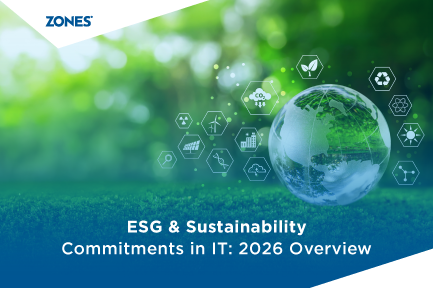
As organizations plan for 2026, sustainability is no longer something that sits outside core IT decision-making. What was once viewed as a reporting obligation or long-term aspiration is now shaping how IT assets are procured, managed, optimized, and retired. ESG commitments are moving decisively from intent to execution, and IT leaders are expected to demonstrate measurable progress across the full technology lifecycle.
Research from Enterprise Strategy Group underscores this shift. Sustainability programs now directly influence IT purchasing decisions and supplier evaluations, signaling a fundamental change in how technology investments are assessed. In practical terms, this means ESG considerations are no longer abstract—they are operational, auditable, and closely tied to risk and resilience.
Why Sustainability Is Crucial in IT Asset Management
Sustainability often enters the conversation at the corporate level, framed around climate targets, governance principles, or social responsibility. But for IT organizations, these commitments are realized or undermine the asset level. Every endpoint, server, network device, and piece of infrastructure contributes to:
- Energy consumption and emissions
- Compliance exposure and audit readiness
- Data security and lifecycle accountability
- Waste generation and value recovery at the end of life
As scrutiny increases from regulators, customers, and boards, IT leaders must now account for how assets are tracked, utilized, refreshed, and retired. ESG credibility depends not only on what an organization commits to, but on how consistently those commitments are reflected in day-to-day IT operations.
This is why sustainability is increasingly influencing:
- Procurement strategy – favoring suppliers with verified ESG programs
- Lifecycle planning – extending asset life where possible and retiring responsibly
- Risk management – reducing exposure tied to data, disposal, and compliance failures
- Operational efficiency – balancing cost optimization with environmental responsibility
What Changes as We Move into 2026
Three shifts are redefining how sustainability applies to IT assets in 2026.
1. Measurement Over Messaging
High-level sustainability statements are no longer sufficient. Stakeholders expect data-backed proof, clear metrics around asset utilization, energy efficiency, emissions, and responsible disposal. IT teams must be able to demonstrate not just policy alignment, but operational outcomes.
2. Lifecycle Accountability
Sustainability expectations now span the entire asset journey. It now spans:
- Deployment and utilization
- Refresh and redeployment strategies
- Secure, compliant, and environmentally responsible end-of-life management
Decisions about extending asset life, redeploying devices, or choosing certified disposal partners are becoming central to ESG performance, not secondary considerations. This end-to-end view is becoming central to ESG credibility.
3. Supplier and Partner Scrutiny
Organizations increasingly expect their IT partners to:
- Maintain recognized certifications
- Embed sustainability into operations
- Support circular IT practices, not linear consumption
Certifications, governance frameworks, and circular economy practices are no longer “nice to have”—they are becoming baseline requirements for trusted technology partnerships.
The Central Role of ITAM and ITAD
As sustainability expectations rise, two disciplines are proving critical to execution.
IT Asset Management (ITAM) provides the visibility needed to understand what assets exist, how they are used, and where inefficiencies or risks may lie. Effective ITAM provides the visibility needed to:
- Track asset utilization and lifecycle status
- Reduce unnecessary purchases and overprovisioning
- Support energy efficiency and cost optimization
Without accurate asset data, it is nearly impossible to measure sustainability performance, control costs, or reduce unnecessary environmental impact.
Equally important is IT Asset Disposition (ITAD). End-of-life practices are now under intense scrutiny. Organizations must ensure that retired assets are:
- Securely data-sanitized
- Reused or remarketed where possible
- Responsibly recycled in compliance with environmental regulations
Poor ITAD practices can quickly expose organizations to regulatory penalties, reputational damage, and missed opportunities for value recovery.
This is why integrating ITAM and ITAD provides a practical approach to responsible IT asset management.
Turning ESG Pressure into Practical Advantage
Organizations that are leading in sustainability are treating sustainability as a design principle for IT operations—not an afterthought. This means:
- Embedding ESG considerations into asset lifecycle decisions
- Aligning IT, procurement, sustainability, and risk teams
- Selecting partners that can support compliance, transparency, and circular outcomes
This integrated approach allows IT leaders to reduce environmental impact while also improving operational efficiency, audit readiness, and long-term resilience. Sustainability, when executed well, becomes a driver of smarter decisions rather than an added burden.
How Zones Brings Sustainability Commitments into Practice
The analyst ESG showcase also highlights how Zones aligns its services to support customer sustainability goals across the IT asset lifecycle.
- An end-to-end IT asset lifecycle framework that emphasizes accountability and visibility
- Responsible logistics designed to reduce waste and environmental impact
- R2v3-certified IT Asset Disposition (ITAD) to ensure secure, compliant, and environmentally responsible end-of-life management
- ISO-certified quality and environmental management systems that reinforce governance, audit readiness, and continuous improvement
By integrating sustainability into asset lifecycle execution—not just policy—Zones helps organizations translate ESG commitments into practical outcomes without compromising operational performance.
Why This Report Matters Now
As we move forward in 2026, the message is clear: sustainability commitments must be visible in how IT assets are managed every day. Leaders who fail to align ESG goals with lifecycle execution may fall behind both operationally and strategically.
This analyst ESG showcase provides:
- Clear and timely insight into how sustainability expectations are evolving
- Practical insight into what buyers and stakeholders now demand
- Guidance on aligning IT asset lifecycle strategies with sustainability, compliance, and risk objectives
If your organization is planning IT investments, refresh cycles, or lifecycle changes for 2026, this report offers a timely, actionable perspective.
Download The State of ESG & Sustainability Commitments in IT: A 2026 Overview to understand how sustainability-driven IT asset lifecycle strategies can help you meet rising ESG expectations, reduce risk, and make better decisions for 2026 and beyond.
 Zones
Zones

 Zones : Jan 22, 2026 8:51:26 AM