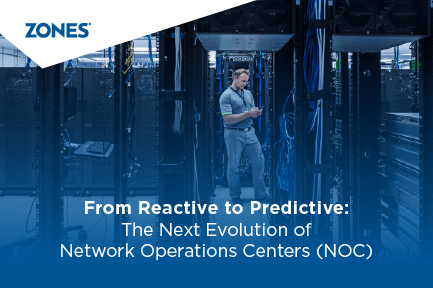
Network operations centers once focused primarily on monitoring and log collection—responding to alerts after they were triggered. Today, they face unprecedented complexity, such as distributed cloud workloads, edge and IoT devices, hybrid work patterns, and latency-sensitive applications. As a result, organizations can no longer accept slow, manual incident resolution. They require NOCs that anticipate issues and act autonomously to preserve business continuity.
Consequently, network teams must shift from firefighting to foresight. Modern NOCs now combine telemetry, observability, and machine learning to detect subtle degradations before they escalate. This strategic shift drives not only technical improvements but measurable business outcomes, including lower mean time to repair (MTTR), reduced downtime, and an improved experience for customers and users.
The Pressure to Modernize — Complexity, Cost, and Customer Experience
First, complexity is rising. Enterprises operate across multi-cloud environments, utilize SD-WANs to connect sites, and push compute to the edge for latency-sensitive applications. Each new domain adds telemetry sources, configuration variants, and failure modes. Traditional rule-based monitoring struggles to keep up, which increases operational cost and expands risk.
Second, cost pressures and talent shortages make fully staffed, manual NOCs unsustainable. Organizations face large volumes of low-value alerts that consume the time of experienced engineers. As a result, businesses demand smarter, automated operations that reduce routine tasks and enable skilled operators to focus on higher-value activities. Market research even shows that NOC-as-a-service growth is on the rise as organizations seek subscription models for scalable operations.
Defining Predictive NOCs — Capabilities and Architecture
A predictive NOC blends three core capabilities:
-
Broad telemetry and observability
-
Machine learning for anomaly detection and predictive maintenance
-
Closed-loop automation for remediation
First, telemetry ingestion must be comprehensive: flows, metrics, logs, traces, configuration snapshots, and business context, such as critical application SLAs. Next, AI and ML models correlate these diverse signals to surface patterns that precede failure, rather than merely reacting to alarms. Finally, closed-loop automation translates insight into action.
This might involve automatically rerouting traffic in response to predicted congestion, triggering preemptive maintenance windows, or applying configuration changes in a tested and reversible manner. Notably, modern predictive NOCs emphasize transparency and human-in-the-loop controls. Automation acts when confidence is high and escalates when human judgment is required. Industry practitioners now call this progression toward an “intelligent” or “Dark NOC” — autonomy with auditability and controls.
Business Outcomes — Measurable Benefits Beyond Faster Detection
Predictive NOCs swiftly produce measurable business value. First, MTTR and MTTD decline because anomalies are detected earlier and remedial playbooks run automatically. Second, service availability improves as predictive maintenance prevents incidents before users are aware of them. Third, operational costs decline as repetitive tasks become automated and skilled staff redirect their efforts toward optimization and strategic initiatives.
Moreover, improved network reliability directly supports revenue and brand reputation. For e-commerce firms, fewer outages mean higher conversion and customer satisfaction. For distributed enterprises, consistent application performance reduces lost productivity. In short, the value case for investing in predictive NOC capabilities is strategic, not merely operational.
Implementation Roadmap — Practical Steps to Build a Predictive NOC
Begin with an honest assessment. Catalog telemetry sources, map service dependencies, and measure current detection and repair KPIs. Use this baseline to prioritize use-cases — for instance, predictable traffic spikes during campaigns, recurring configuration drift, or recurring hardware failures.
Next, select observability and analytics tools that can normalize data and support explainable ML models. Then adopt incremental automation. Start with automated enrichment and triage, progress to automated mitigations for high-confidence events, and finally implement fully autonomous workflows for low-risk remediation.
Implement governance mechanisms throughout, including approvals, audit trails, rollback mechanisms, and human oversight thresholds. Finally, measure rigorously and iterate; predictive capabilities improve as models learn from additional data and responses. Research and vendor analyses highlight phased modernization as the most effective approach.
People and Process — Skills and Culture for the Predictive Era
Technology alone cannot deliver transformation. Teams require new skills: telemetry engineering, data science for ML model stewardship, automation engineering, and software skills for orchestration. Simultaneously, process disciplines must shift from ticket-centric workflows to outcome-centric SLAs and run-books that accommodate automated steps
Leaders must also address cultural change. Operators require confidence in automation and clear protocols for handling exceptions. Continuous learning programs, cross-training with DevOps, and strong change management accelerate adoption. Finally, internal KPIs should reward proactive improvements and uptime, not just ticket closure speed. Industry discussions emphasize the human element as the decisive factor in successful NOC modernization.
How Zones Helps
At Zones, we understand that building a predictive NOC is not merely a technology upgrade—but a transformation of operational capability. Our approach begins with a comprehensive assessment aligned with our proven ADIM (Assess, Design, Implement, Manage) framework. We help you inventory telemetry sources, map dependencies, and prioritize high-impact modernization use cases. Next, we co-design your target NOC architecture, integrating AI/ML platforms, observability stacks, and automation playbooks, for seamless orchestration.
During implementation, we leverage our partnerships with leading vendors (including those specializing in AI-driven network operations) and our certified network of engineers to deliver safe automation workflows, closed-loop remediation, and governance controls. In the manage phase, we provide ongoing telemetry analytics, model tuning, and managed NOC services—enabling your team to transition from alerts to action. With Zones, you gain the complete lifecycle support required to mature towards a predictive, resilient, and business-outcome-driven NOC.
Why Partner with Zones
Partnering with Zones offers you several differentiators. First, our end-to-end lifecycle capability means you don’t need to coordinate multiple vendors. Zones bridges assessment, design, implementation, and managed operations under one roof.
Second, our extensive experience across network modernization, multi-cloud, edge, and hybrid environments enables us to understand the interdependencies that often hinder transformation.
Third, we align technology, process, and skills—ensuring your network team is ready for AI-driven operations, not just new dashboards. Finally, our focus on measurable business outcomes—with defined improvement KPIs for MTTR, availability, and cost reduction—means your investment links directly to value. In short, Zones gives you the partner, the process, and the platform to make the predictive NOC vision real.
References:
- Global Market Insights, “Network Operations Center as a Service Market Report, 2034” (2025) (Global Market Insights Inc.)
- INOC, “NOC Best Practices: 11 Ways to Improve Your Operation” (2025) (inoc.com)
- Worksent, “NOC Monitoring Trends: The Future of Network Operations …” (2025) (Worksent)
- Capgemini, “The Rise of the Dark NOC: A new era in network operations” (2025) (Capgemini)
 Zones
Zones

 Zones : Aug 6, 2024 2:58:03 AM