Distributed work, relentless refresh cycles, and tighter security regimes have made device configuration one of the highest‑impact stages in the IT lifecycle. Across mid‑to‑large enterprises, configuration errors and inconsistent enrollment are commonly cited as leading causes of early device rework and delayed time‑to‑productivity.
Additionally, deployment planning now consumes materially more time than it did just a few years ago—and the ripple effects are costly: more tickets, more overnight shipments, and more project drag.
Choosing the right IT configuration partner has become a business-critical need. The partner you select must not only configure hardware; they must ensure operational readiness, safeguard your data, and streamline your entire IT lifecycle. Before onboarding a configuration partner, you should ask specific questions, probing beyond basic capabilities to understand their process maturity, scalability, security posture, and ability to integrate with your broader IT strategy.
What an Ideal IT Configuration Partner Looks Like
Before you dive into vendor questionnaires, align on what success means for your organization. If your goal is deployment‑ready on Day 1, the IT integration and configuration partner you choose should deliver:
Consistency at scale: Standardized imaging, repeatable workflows, and quality checks that hold up across thousands of devices and multiple regions.
Security by design: Credential handling, image custody, and network provisioning that meet your compliance baselines.
System integration: Smooth data exchange with your IT Service Management (ITSM), Mobile Device Management (MDM), Unified Endpoint Management (UEM), and Configuration Management Database (CMDB) for end‑to‑end visibility.
Speed + predictability: Reliable SLAs for staging, kitting, and shipping that align with your rollout plan.
Lifecycle coverage: From proof of concept and procurement planning to asset disposition.
With this target picture in mind, here are the questions that separate strong partners from the rest.
Top 10 Questions to Ask an IT Configuration Partner
Here are the top questions every organization should ask an IT configuration partner in 2026, along with the context for why each question matters and what a strong answer looks like.
1. Which certifications and quality standards do your facilities and engineers hold?
Start with the fundamentals—certifications are your best early signal on process maturity and repeatability.
What to hear: ISO‑certified facilities, Original equipment manufacturer (OEM) certified engineers (e.g., Dell, Lenovo, HP, Apple), and Information Technology Infrastructure Library (ITIL) aligned processes.
Why it matters: Certified environments reduce the risk of configuration errors, shipment delays, and device mismanagement, which are problems that can compound quickly at enterprise scale.
2. How do you ensure device readiness on Day 1?
Device readiness isn’t just about imaging; it’s about every step that affects user experience. True readiness eliminates first‑day tickets and last‑minute desk‑side work.
What to hear: Custom images, Basic Input/Output System (BIOS), Unified Extensible Firmware Interface (UEFI) settings, encryption policies, user profile/application provisioning, and device validation before shipping.
Why it matters: A truly deployment-ready device eliminates the need for internal IT intervention, saving significant time and reducing help desk tickets.
Bonus: Pre‑wired accessories, tested docks/monitors, and “open‑me‑first” documentation to streamline the unboxing experience.
3. Which integration capabilities do you offer with my ITSM tools?
Without integration, you’ll fly blind on inventory, status, and compliance.
What to hear: Native hooks or APIs for ServiceNow/Jira/Freshworks/BMC, plus enrollment to Microsoft Intune, Windows Autopilot, System Center Configuration Manager (SCCM), or other UEMs.
Why it matters: ITSM integration creates real-time visibility into inventory, deployment status, asset attributes, and compliance, which are essential for governance and lifecycle management.
Proof point: Ability to write back asset attributes (serials, owner, location, warranty, configuration version) to your CMDB.
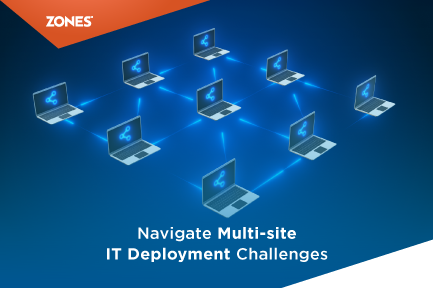
4. How do you manage large-scale or multi-site configuration and staging?
Capacity is not just warehouse space; it’s project orchestration plus logistics precision when choosing a configuration partner.
Probe into:
- Global logistics and warehousing footprint
- Inventory buffering
- Serialized tracking
- Multi-site rollout experience
- Lead times and project management structure
Why it matters: If your organization spans multiple regions or countries, you need a partner capable of consistent execution across all sites.
5. Which security protocols do you offer to protect my data during imaging and configuration?
With rising cyberthreats, security must be embedded into every stage of configuration.
Ask questions like:
- How do you secure my images?
- What methods protect devices during storage and transit?
- Do you offer secure network provisioning?
- How do you handle sensitive user and corporate data?
What to hear: Segregated networks, hardened build stations, credential vaulting, chain‑of‑custody logs, and secure shipping methods.
Why it matters: Configuration partners handle sensitive network settings, access profiles, and enterprise applications. Any breach can have organization-wide consequences.
6. How do you handle exceptions, defective-on-arrival (DOA) devices, and configuration deviation?
Even with robust processes, issues happen. What matters is how your partner responds.
Ask them about:
- Reverse logistics workflow
- Device inspection and diagnostics
- Replacement timelines
- Reporting transparency
- Average time to resolution
What to hear: A documented RMA and triage loop, rapid swap options, and near‑real‑time reporting when devices fail validation.
Why it matters: Fast resolution prevents deployment delays and keeps end users productive.
7. Can you support customized or specialized workflows for our industry?
Industries like healthcare, financial services, retail, and government have unique deployment requirements.
What to hear: Support for healthcare device profiles, financial services hardening, retail store‑in‑a‑box kits, or rugged device provisioning.
Why it matters: A one-size-fits-all configuration model will not work for highly regulated or high-volume environments.
8. What kind of visibility and reporting do you provide throughout the configuration and deployment process?
Transparency is essential for managing timelines, compliance, and inventory.
What to hear: Dashboards for WIP devices, pass/fail checks, asset‑level data capture (including MAC/IMEI), serial number-based tracking, configuration validation reports, and shipment milestones.
Why it matters: Without visibility, IT teams operate reactively, slowing down projects and increasing costs.
9. How do you ensure consistency across all configured devices?
Consistency drives reliability, compliance, and long-term manageability.
What to hear: Automated build pipelines, peer reviews, standardized imaging processes, multipoint quality checks, OEM-grade testing equipment, and versioned images with sign‑off gates.
Why it matters: Inconsistency leads to rework, support tickets, vulnerabilities, and employee frustration.
10. What lifecycle support do you offer beyond configuration?
A mature partner offers more than device setup; they support the complete IT lifecycle. In other words, there should be one accountable partner from POC through refresh and retirement.
What to hear: Staging, rack‑and‑stack, mobility deployments, kitting and bundling, global distribution, break/fix, secure asset disposition, recycling and remarketing.
Why it matters: Choosing a partner that supports full lifecycle orchestration reduces vendor sprawl and increases operational efficiency.
How Zones Meets The Ideal Configuration Partner Requirements
If you’re evaluating partners, here is how Zones maps to the criteria above, grounded in integration, quality, and scale.
Certified facilities, certified people
Zones operates ISO‑certified Technology Solutions Centers and leverages OEM‑certified integration specialists. That means standardized, repeatable processes backed by audited quality controls.
Deployment‑ready on Day 1
Zones’ Staging & Configuration services are designed so devices arrive ready to work, not ready to be worked on.
- What that includes: Customized image configurations, device enrollment, ITSM integration, asset tagging/labeling, role‑based security settings, access control, and thorough device validation prior to ship.
- User‑first touches: Kitting and bundling, “Office in a Box” options, and Open‑Me‑First documentation for a frictionless unboxing.
Deep tool-chain integration
Zones integrates with leading ITSM platforms such as ServiceNow and Jira, and with UEM/MDM ecosystems to keep your CMDB accurate.
- Outcome: Real‑time visibility into inventory, configuration versions, and deployment status—plus cleaner audit trails.
Security embedded at every step
From secured build networks to configuration data custody and shipping controls, Zones treats security as part of the build, not an afterthought.
- Added resilience: Contingency and disaster recovery planning to protect timelines and data integrity.
Global scale with predictable SLAs
Backed by global logistics, inventory, warehousing, and distribution, Zones supports multi‑site and multi‑region rollouts with consistent execution.
- Operational benefits: Serialized tracking, milestone reporting, and named program management for complex deployments.
Lifecycle coverage—start to finish
Beyond configuration, Zones supports proof of concept engineering, rack & stack, mobility deployments, etching/branding, boxless delivery, and environmentally safe IT asset disposition—so the same team can help you deploy, support, refresh, and responsibly retire devices.
Conclusion: The Right Questions Lead to the Right Partner
Configuration is where strategy meets reality. The right partner will reduce your deployment risk, compress timelines, and elevate the user experience, while giving you the visibility and control your governance model demands. By using the questions above, you’ll be able to separate claims from capabilities and select a configuration partner who can execute at scale, securely and repeatedly.
Ready for deployment‑ready devices on Day 1?
See how Zones Integration & Configuration Services deliver consistent, secure, and scalable results, from custom imaging and Autopilot/Intune enrollment to global logistics, kitting, and secure disposition.
Book a call to learn more.
 Zones
Zones
 Zones : May 27, 2025, 9:35:40 AM